Tailor-made journeys through Uzbekistan
Uzbekistan reveals the history of the Silk Road through the architecture of Samarkand, the trading quarters of Bukhara and Khiva’s walled old city. A classic journey takes eight to ten days, while a more detailed itinerary including Khiva or the Fergana Valley can extend to two weeks.
Tashkent and Samarkand
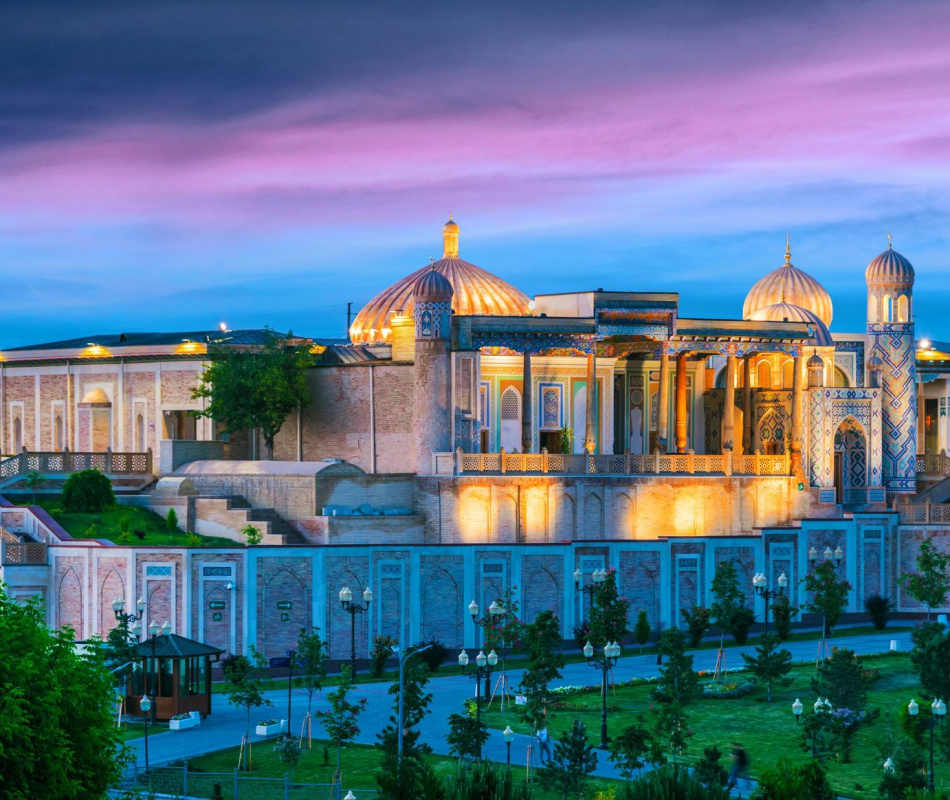
Tashkent is the usual starting point. A city programme can include the Hast Imam complex, Chorsu Bazaar, the Museum of Applied Arts and the decorated stations of the Tashkent Metro. One or two days provide an introduction to the modern capital before the journey continues.
Samarkand, recognised by UNESCO as a crossroads of cultures, deserves at least two complete days. Its defining sites include Registan Square, the Shah-i-Zinda necropolis, Gur-e-Amir Mausoleum, Bibi-Khanym Mosque and Ulugh Beg Observatory. Visits should be divided between different days because the monuments are not concentrated within a single district and daytime heat can affect the pace of touring.
Bukhara and Khiva
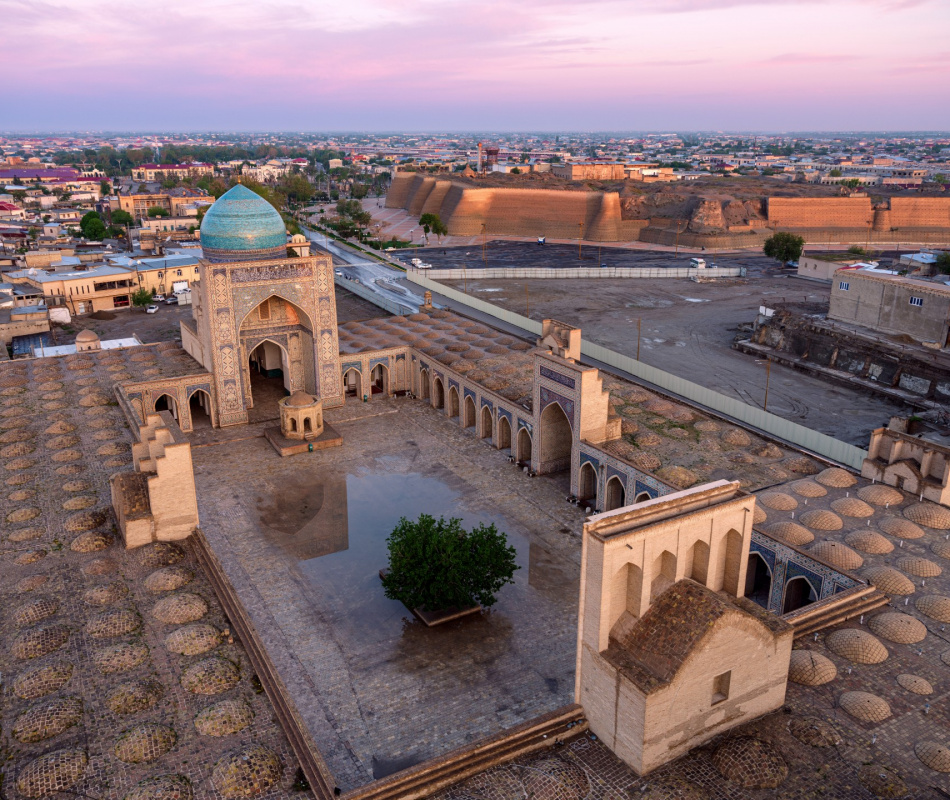
Bukhara’s historic centre preserves madrasas, mosques, trading domes and caravanserais. The principal route connects the Poi Kalyan ensemble, Ark Fortress, Lyabi-Hauz and the Samanid Mausoleum. Two nights allow time for both the monuments and workshops specialising in embroidery, metalwork and traditional textiles.
Itchan Kala, the walled historic centre of Khiva, can be explored largely on foot. Its landmarks include the Kalta Minor minaret, Juma Mosque, historic madrasas and Tash Khauli Palace. One night provides a brief introduction, but two nights make it possible to experience the city beyond the busiest daytime hours.
Accommodation and regional cuisine
Tashkent offers the country’s widest selection of contemporary hotels. In Samarkand, Bukhara and Khiva, smaller properties occupying traditional courtyard houses can provide a stronger sense of place. The most desirable rooms are limited and should be reserved in advance.
The journey can also include a plov cooking experience, visits to produce markets and an introduction to regional versions of samsa, manti, flatbreads and seasonal vegetable dishes.
Season and transport
April to May and September to October generally provide the most comfortable conditions. Summers in Samarkand, Bukhara and Khiva can be intensely hot, making early and late sightseeing preferable. Winter brings occasional freezing temperatures but considerably fewer visitors.
High-speed trains connect Tashkent, Samarkand and Bukhara. Convenient departures can sell out quickly, particularly during spring and autumn. Khiva can be reached through Urgench by domestic flight and car, or incorporated into the railway itinerary. Current timetables should be confirmed before the journey is finalised.