MIRACLES OF ADAPTATION IN THE WILD
While observing fur seals, admiring graceful flamingos, or tiny hummingbirds, we rarely consider how complex their structures are. Let's talk about their adaptation mechanisms.
HUNTERS IN THE DEEP
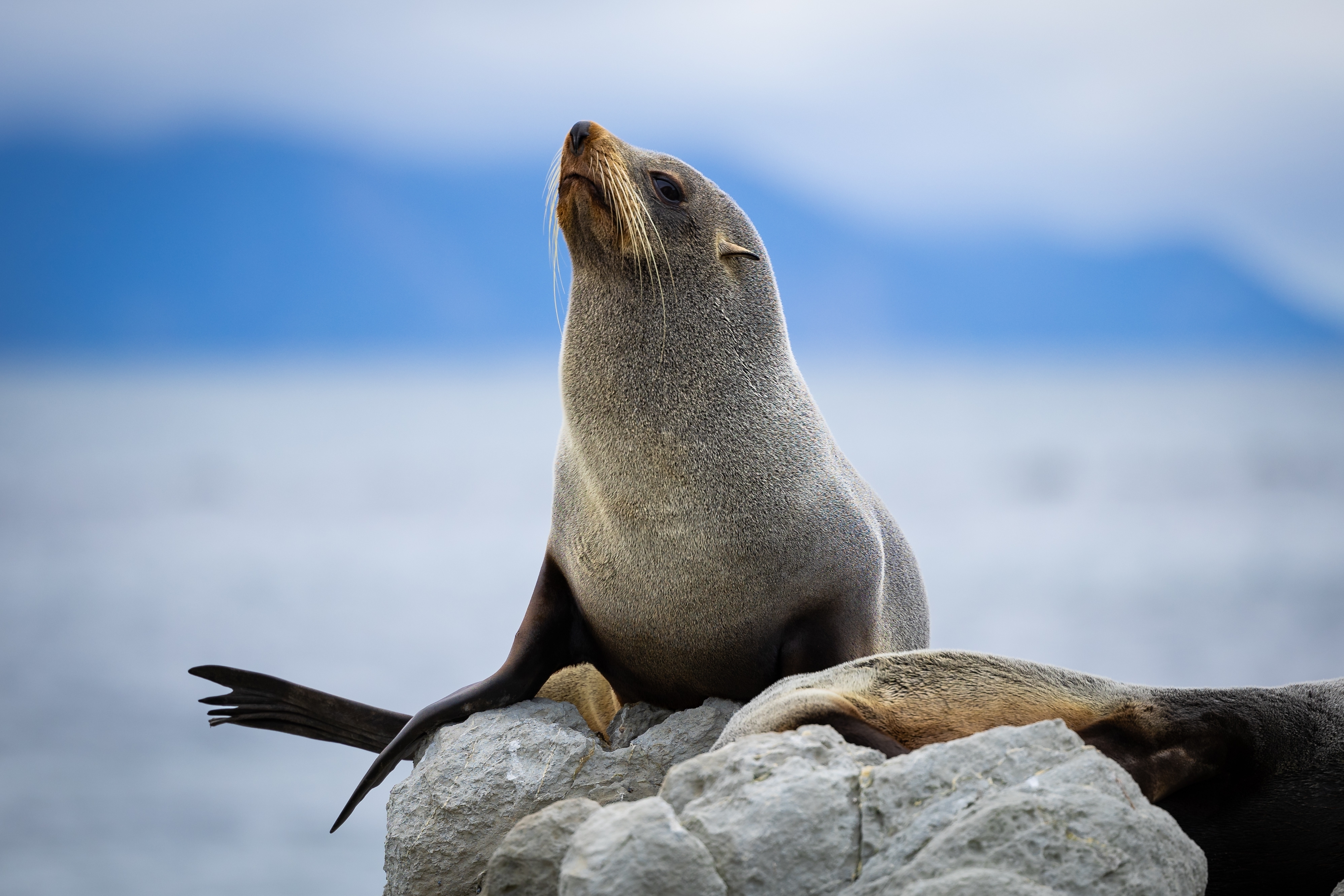
At depths of 200 meters or more, in the so-called twilight zone, only a small amount of light penetrates, and below 1,000 meters, darkness sets in. But seals and fur seals are capable of diving even to these depths. Northern elephant seals, for example, are among the deepest divers among mammals, and can survive at depths of 1,500 meters, foraging for food away from other predators. Their enormous pupils, which dilate to their maximum at depth, and a reflective layer located behind the retina allow pinnipeds to navigate underwater. Their whiskers detect vibrations and, therefore, movement in the water, making it easier to find prey. Each whisker has 1,500 nerve endings—more than any other animal (for example, cats have only 200), making them the most sensitive. Thanks to their whiskers, they find food even in complete darkness at great depths. Moreover, they rescue individuals who, for whatever reason, have impaired vision or are blind.
WHERE TO SEE THEM:
You can swim with seals, sea lions, and fur seals in Australia, New Zealand, South Africa, the Galapagos Islands, Patagonia, Baja California (Mexico), Canada, the UK, and at the South Pole.
STANDING BIRDS
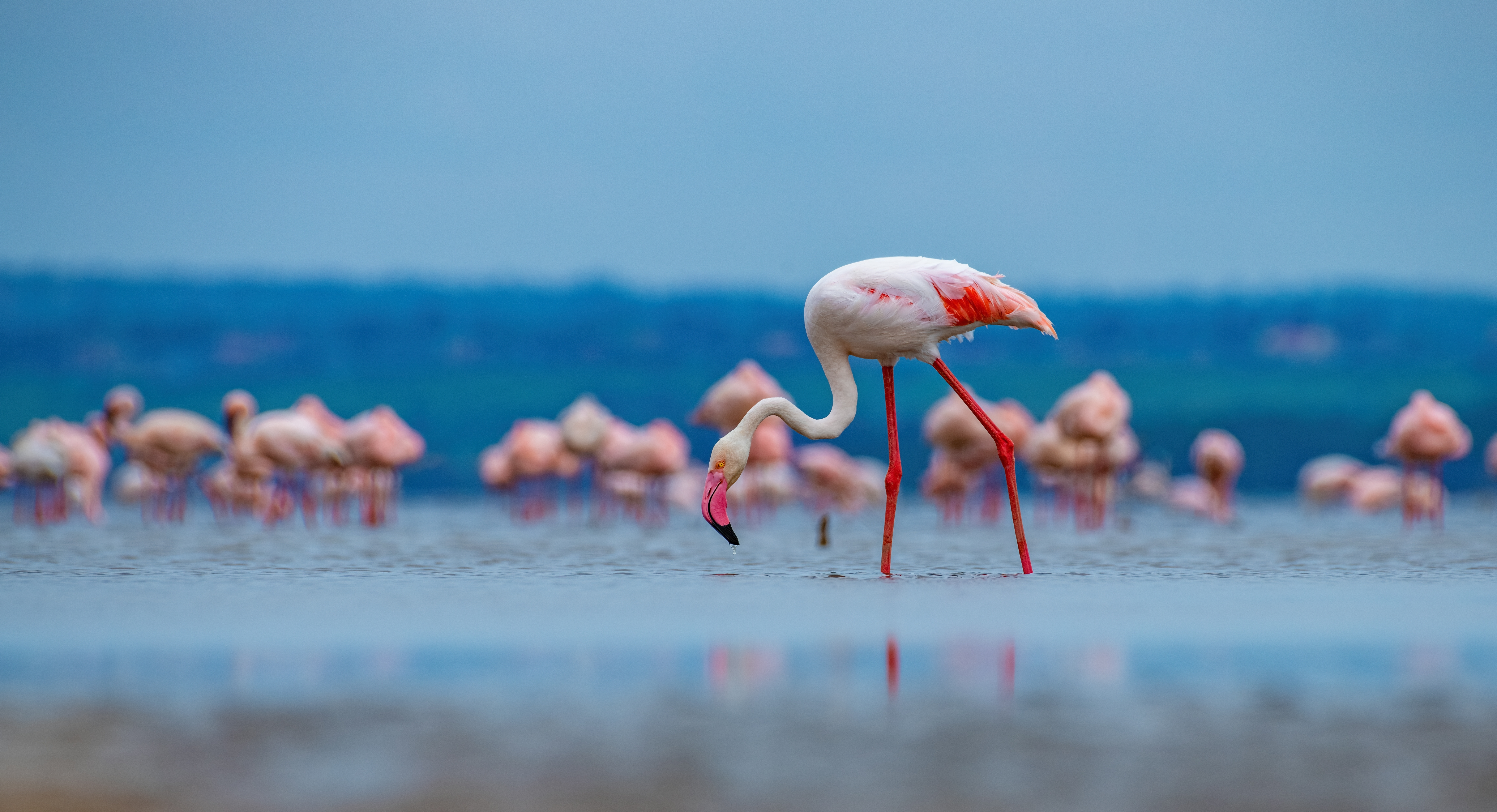
We are accustomed to associating flamingos with the salt marshes of Africa, so encountering them in the high Andes would be a complete surprise. Chilean, Andean, and James's flamingos inhabit this area. The latter lives so high that until the 1950s, it was considered extinct. At altitudes above 4,500 meters, temperatures drop below freezing at night, and sometimes the birds' feet freeze in the ice, temporarily trapping them in mountain lakes. To stay warm, flamingos fluff up their feathers, trapping a layer of warm air close to their bodies. They can also stop the blood flow to their legs and flippers, preventing the cold from transferring from their lower extremities to their body. Some congregate near volcanic hot springs, where the water is safe from freezing. Why, one wonders, do the birds tolerate such conditions? The answer is that there are no predators at high altitudes. And as soon as the sun rises, the ice melts, and it's time to feast in the salt lakes.
WHERE TO SEE: during travels in Argentina, Chile, Bolivia, and Peru. In particular, all three flamingo species live in the high-altitude salt marshes of the Los Flamencos National Reserve (Chile).
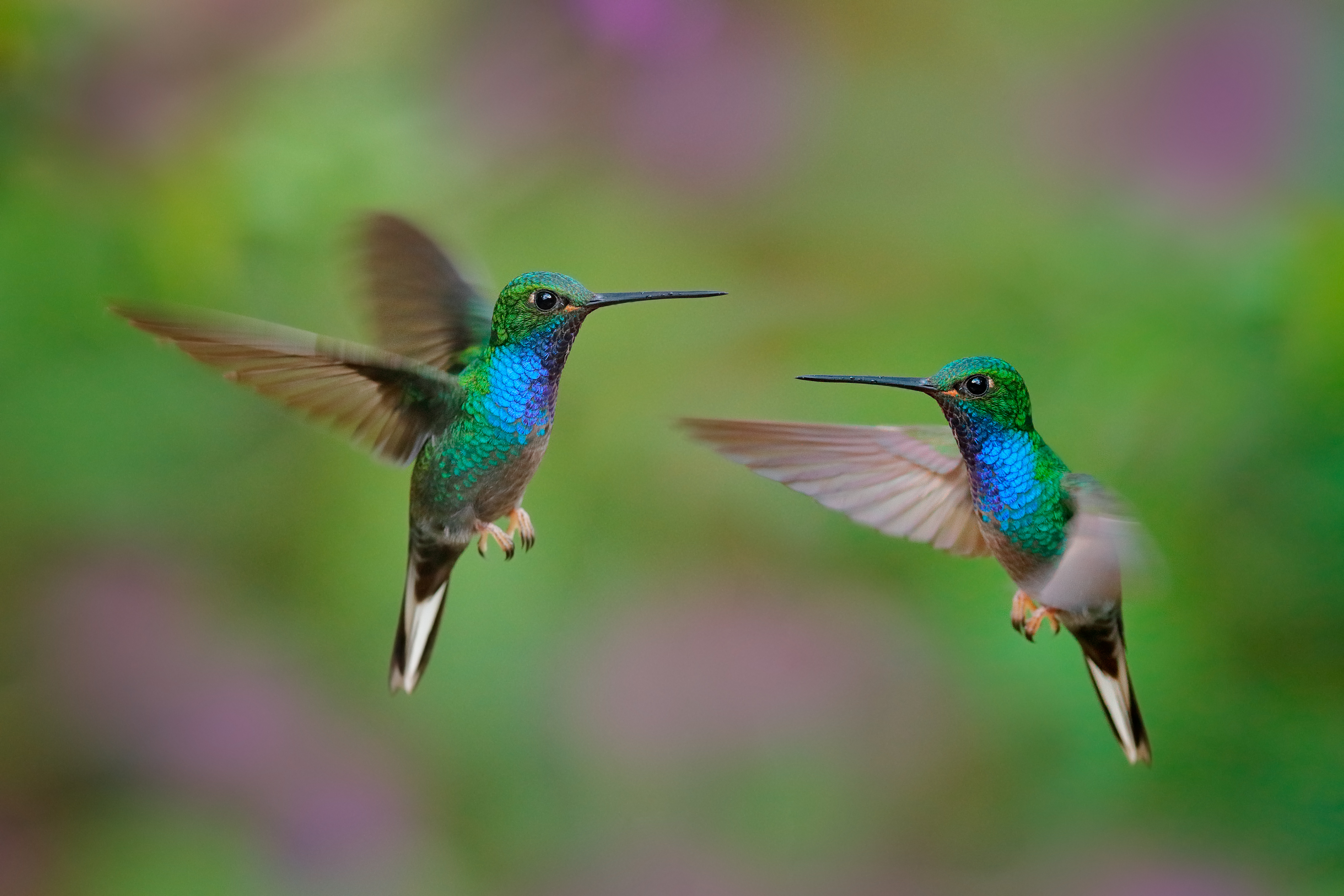
THE GREAT MIGRATION OF THE BABY
Among the champion migratory species are Arctic terns, humpback whales, caribou, wildebeest, and zebras. And what if hummingbirds, weighing no more than 4 grams, travel from Alaska and Canada to southern Mexico and back, returning to the same spots year after year? It takes them 20 hours to cross the Gulf of Mexico (800 km) without stopping. To withstand prolonged fasting (at other times, they eat every 10 minutes), hummingbirds gain weight before flight. Birds migrate alone to avoid competition for food. They defend their territories and nests, attacking even larger birds. To ensure that all hummingbirds have enough nectar, different hummingbird species extract it from flowers at different altitudes and times of day. In some species, males and females have bills of different lengths for the same reason. Sword-billed hummingbirds in the humid mountain forests of the Andes have bills longer than their bodies, allowing them to extract pollen from the very depths of the corollas.
WHERE TO SEE THEM: Across the Americas, from Alaska to Tierra del Fuego. But the largest numbers are found in Ecuador, Colombia, Bolivia, and Costa Rica. One of the best places is Ecuador's Podocarpus National Park, home to over 600 bird species. And you can combine nature with luxury relaxation at Mashpi Lodge.
Other articles