
Tours to Bordeaux
Tours to Bordeaux
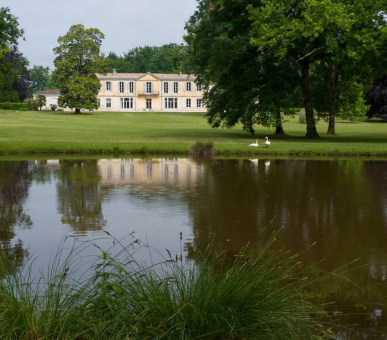

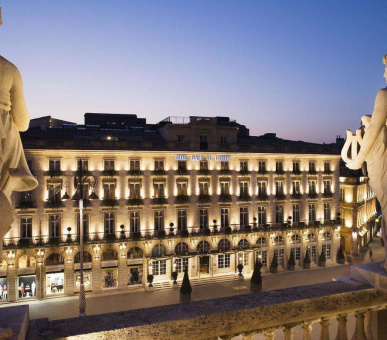




Bordeaux is the fifth largest city in France, located 600 km south of Paris on the banks of the full-flowing Garonne River. Bordeaux is a city with a rich history, known since ancient times as Burdigal. Back then, it was the capital of ancient Gaul, and today it is the administrative center of Aquitaine.
Surrounded by fertile lands and close to the sea, Bordeaux exudes a southern spirit and hospitality, gradually revealing its architectural, culinary, and winemaking masterpieces to travelers.
Bordeaux has always been a city of skilled artisans and winemakers, aristocrats, and clergy. Medieval knightly armor crafted by Bordeaux armorers was considered a benchmark and saved the lives of many ardent members of the French aristocracy. As for winemaking, the fame of Bordeaux wines has long transcended the borders of not only France but also Europe, spreading throughout the world. The local vineyards boast varieties such as Château Margaux, Pauillac, Saint-Estère, Pessac, Château Yquem, Pomerol, Saint-Émilion, Graves, and Sauternes, named after the surrounding lands, estates, and chateaux.
Bordeaux is a green and picturesque city with numerous beautiful squares, streets, and monuments. The city's main pedestrian street, Sainte-Catherine, offers a multitude of cozy restaurants, cafes, and bars where you can relax with a glass of excellent wine and lazily watch the colorful crowds. The Place des Quinconces, the largest in Europe, is dominated by a majestic monument with fountains, erected in honor of the deputies of the Revolution (1894–1902). The elegant Place de la Bourse, located on the waterfront, has been completely restored. One of the most beautiful buildings in 18th-century Europe is the Grand Théâtre, designed by architect Victor-Louis.
Be sure to visit the so-called "Triangle"—the area bounded by Avenue de l'Intendance, Avenue Clemenceau, and the Allées de Tourny. All the streets in the area converging on Place des Grands Men bear the names of thinkers who inspired the French Revolution, during whose era this neighborhood was founded. Be sure to admire the Cathedral of Saint-André, built to commemorate the wedding of Eleanor of Aquitaine to Louis VII. The Romanesque cathedral, consecrated in 1096, was reconstructed between the 12th and 16th centuries. Separately built in the 15th century, the Pays Berland Tower—a true masterpiece in the Flamboyant Gothic style—is topped by a sculpture of the Virgin and Child. The Chartrons district is named after the monastery located here. It was in this Bordeaux suburb that commercial agreements were concluded and a lively wine trade took place. Two beautiful "Dutch" houses, built in the 17th century, remain. The Chartrons Museum, housed in the modern building of the International Wine City, houses labels from all vintages, as well as a working wine press and bottling plant from the 18th century.
Bordeaux's rich history is carefully preserved in numerous museums, all of which are a must-see. The most significant and interesting are the early Christian sanctuary of Saint-Serin, the Archaeological Museum, the Museum of Decorative Arts, and the Museum of the History of Aquitaine, as well as the Jean Moulin National Centre, home to the Museum of the Resistance. The Museum of Fine Arts, the Goya Museum, and the Ethnographic Museum also impress with their rich collections. The Customs Museum, home to numerous exhibits related to the smuggling industry, is unique and informative. The Printing Museum introduces visitors to the development of modern printing.
Bordeaux Climate
Oceanic climate: frequent but light precipitation; slight temperature fluctuations throughout the year.
Moscow time minus 2 hours.
Bordeaux has an international airport. Flights via Paris are available with Air France. The TGV high-speed train journey from Paris takes over four hours.